
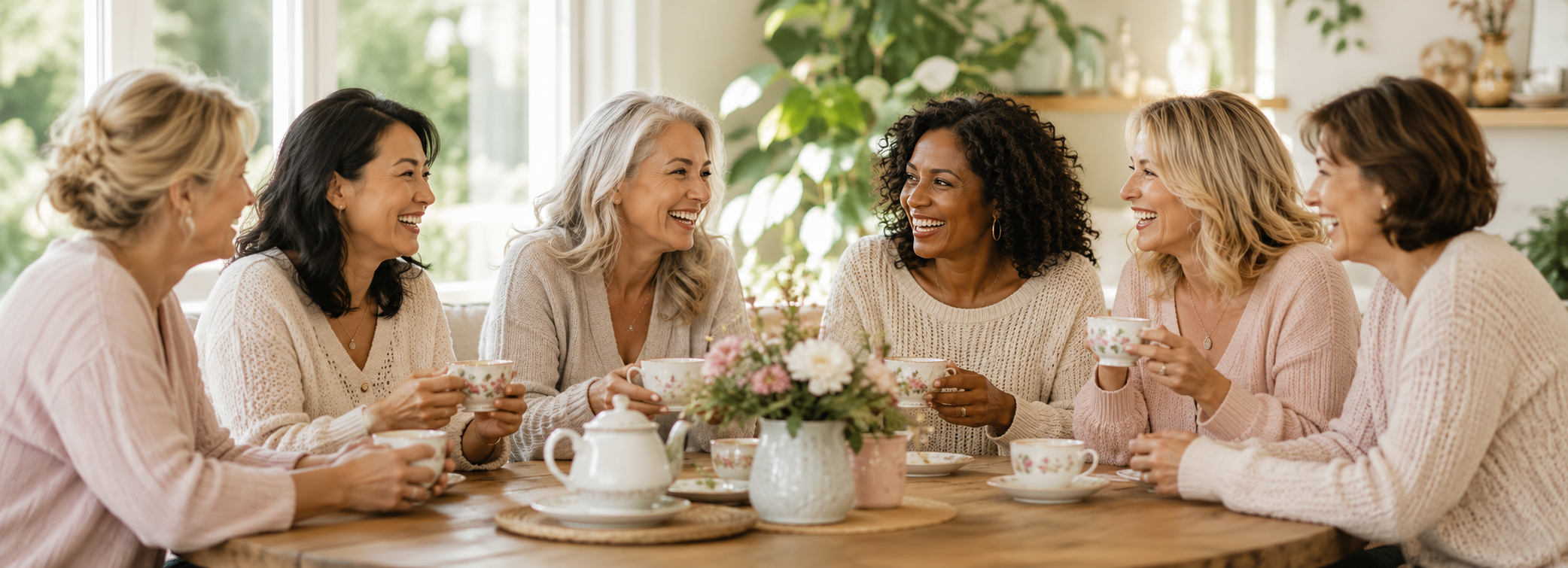
Women are natural nurturers. We are hard-wired to love, support, and care for the people around us. There is incredible power in that…and even more power when women come together. But as we get older, maintaining close friendships and making new ones often becomes much harder. Between careers, raising families, caring for aging parents, and the demands of everyday life, meaningful connection can quietly slip to the bottom of the priority list.
How much time does it take to make friends?
Have you ever met someone who you liked immediately and knew you’d be friends for years to come? While it’s magical when it happens, it doesn’t occur that often.
According to researchers, it takes about 40 to 60 hours together over a relatively short period to develop a casual friendship. Reaching the level of a true friend takes closer to 80 to 100 hours, while our closest friendships often represent 200 hours or more of shared experiences.
That seems like a big time commitment, doesn’t it? It’s no wonder we’re lonelier now than ever before. In fact, over 40 percent of American adults report feeling lonely, and the number of people who say they have a close confidante in their lives is quickly declining. Social media doesn’t help either. Watching everyone else’s highlight reel can make it seem like everyone else has a full social calendar while you’re sitting at home. But remember… you’re seeing curated moments, not everyday reality.
Giving up and staying closed off isn’t the answer. Loneliness is correlated with many health conditions, from chronic pain to heart disease to depression. While being isolated doesn’t cause chronic pain, it can exacerbate symptoms and contribute to feelings of depression about the situation. Researchers have found that the quality of our relationships is one of the strongest predictors of healthy aging…even more important than cholesterol levels for predicting long-term well-being.
Positive social connection has been shown to lower stress hormones, improve immune function, and even support healthy brain aging.
Luckily, there are many different ways to promote connection and battle loneliness. Finding a community of people… whether it’s a workout group, a support group, a book club or other group… can help you create and maintain relationships with people and keep you from feeling lonely.
Six Ways to Build Meaningful Connections
- Volunteer
Whether your service takes you to regular PTA meetings, community fundraisers or one-off events like a trail cleanup, volunteering is a positive way to fight loneliness. Multiple studies show that the more people volunteer, the happier they are. A Harvard Medical School study found that people who volunteer regularly report greater happiness, a stronger sense of purpose, and lower rates of loneliness. Even volunteering once or twice a month can make a meaningful difference.
- Engage with a spiritual group
Attending regular meetings at your local temple, church, mosque or spiritual center can help you connect with people who share your beliefs as you deepen your spiritual side. Not only will you increase your chances of making new friends, but you’ll also be happier. Numerous studies focusing on diverse groups all confirm that a spiritual practice increases people’s satisfaction with life — thanks to the connection they feel with other people, the meditative nature of prayer, and a sense of belonging to something bigger than themselves.
- Try a coworking space
If you work remotely, or simply enjoy getting out of the house…a coworking space or even a favorite coffee shop can help create opportunities to see familiar faces and strike up conversations. Showing up repeatedly establishes a routine, and you’ll see the same faces repeatedly, giving you a chance to get to know others in a way that’s less stressful than jumping into a new social group.
- Pursue an interest you already have
Take a moment to think about your interests. Do you love mahjong, cooking classes, gardening, bird watching, going to the movies, hiking, travel, pickleball, crafting, reading books, hanging out with other moms, softball? How can you engage more with your interests to become part of a larger community? Check with your local rec center for group meetings or search for a local group that resonates with you.
- Switch from solo to group exercise
Working out by yourself is great, but what if you switched things up and attended a group class to your schedule once a week? Barre, yoga, spinning or bootcamp classes offer you the chance to change your routine and meet other people interested in health and wellness. Seeing the same people week after week can build connections that can move beyond the gym or studio.
- Set anchor plans
One simple way to combat loneliness is to create an anchor plan…a recurring activity that gives you a built-in opportunity to connect with others. Unlike trying to make plans every week, an anchor plan happens automatically, whether it’s a standing Wednesday coffee date with a friend, a weekly pickleball game, a book club, canasta or mahjong, a volunteer shift, a walking group, or attending the same fitness class every Tuesday. These built-in points of connection provide something to look forward to, deepen friendships over time, and make it less likely that days or weeks will pass without meaningful social interaction.
Word of caution
Be mindful how you feel when joining a group that focuses on overcoming trauma or illness. While shared experiences can create powerful bonds, don’t let one chapter of your life become your entire identity.
It can be healing and supportive to become part of a group focused on overcoming trauma, illness, grief, or another life challenge, but as you recover and grow, you also deserve relationships that reflect all the other parts of who you are. You are a multifaceted person, and the people around you should encourage your growth. Support groups should feel just that: supportive. Surround yourself with people who lift you up, celebrate your progress, and make room for the person you’re becoming.
When loneliness runs deeper
Loneliness is common at every stage of life, whether you just moved to a new area, started a new job, lost a spouse through death or divorce, or have found that you have outgrown past friendships. If you’ve tried “getting out there” and developing new friendships, but find that your relationships lack meaning, it might be time to look a little closer at what might be standing in the way of your developing intimacy. A good therapist may help explore what is going on for you personally.
Ask yourself a few questions:
- Am I afraid of letting people really know me?
- Am I feeling too anxious, overwhelmed, or down to reach out?
- Do I struggle to move beyond small talk?
- Am I looking for friendship in places where deeper connection is unlikely?
Building meaningful friendships takes time, courage, and repeated effort…but it’s one of the best investments you can make in your health. You don’t need dozens of friends or a packed social calendar. Even one or two people who truly know, support, and encourage you can make a profound difference.
So take the first step. Send the text. Join the class. Accept the invitation. Say yes to coffee. The people prescription doesn’t require perfection…it simply begins with connection.
Final note:
Sometimes the biggest barrier to connection isn’t a lack of wanting meaningful relationships…it’s that we don’t have the energy, motivation, or emotional bandwidth to put ourselves out there.
If low mood, stress, or lack of energy is making it difficult to connect with others, that deserves attention too. Sometimes caring for ourselves is the first step toward being able to show up more fully in our relationships and communities.
Taking care of your own mental and emotional health can help create the capacity to reconnect with others. Along with the basics that support well-being like good nutrition, movement, restorative sleep, and time in nature, UpWellness Mind & Mood provides targeted nutritional support for mood, stress resilience, and emotional balance.